RSS

Author Archives: coffeehouseguy80

Bason Coffee & More, Danville, PA

Danville.

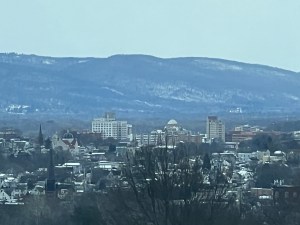
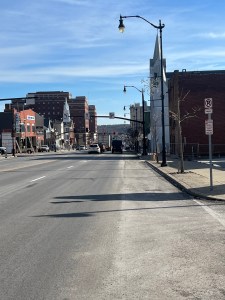
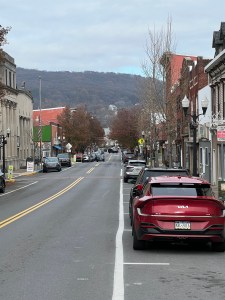
Everyone in the Susquehanna River Valleys region has heard of Danville. So has everyone in Northeast PA (NEPA). This leaves us with a question: Where is Danville? It’s easy to find Danville on a map. Situating it within Pennsylvania’s cultural tapestry is more difficult. It’s roughly equidistant between Sunbury (a quintessential valley town) and Bloomsburg (clearly a product of northeastern Anthracite country). I’m calling this one for NEPA, but only just. I’ll explain below.

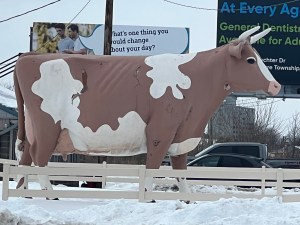
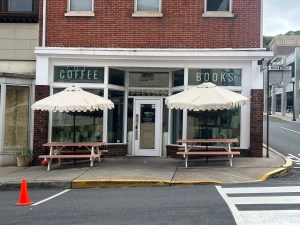
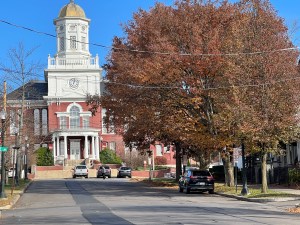
It’s the architecture. Danville has the feel of a coal town. It’s compact, with a defined downtown. Many villages in the valleys and western mountains of Pennsylvania are spread out, organic collections of houses and maybe a church or bar astride a main road. Danville, on the other hand, appears old and established, a place of stone, rather than wood. It reminds me of Pottsville or maybe Orwigsburg; both lie to the south, but the resemblance is uncanny.

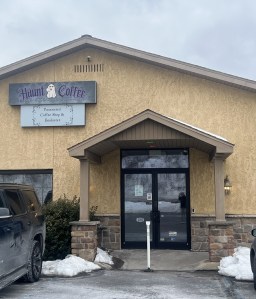
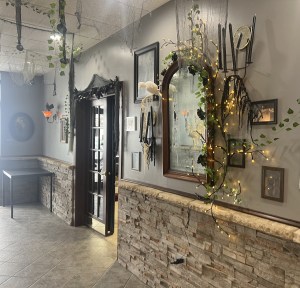
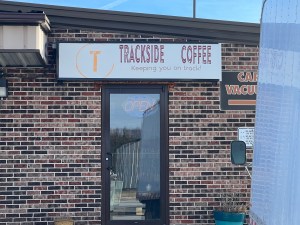
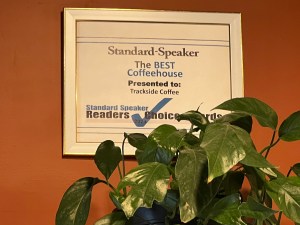
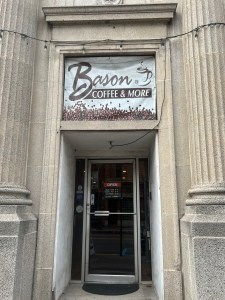
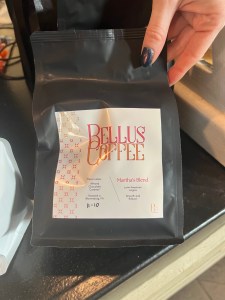
Bison Coffee & More fits perfectly within the context of this town, artistically and as an institution. I must confess, I read the name as “Bison” and “Basin.” The word “Bason” doesn’t really work in my brain. I forgot to ask where the name “Bason” came from, because my journalistic skill evaporates after a few hours on the road. Their website revealed no answers, but gave insight into how Bason began.

Bason isn’t just a coffeehouse; it’s a roasting company. They specialize in small batch roasts, so if you haven’t heard of them, I’m not surprised. I hadn’t heard of them, either, which is odd given that they’ve been in business since 2011. Apparently, it all started with a conversation between the owners and a pastor who was passionate about coffee. That’s according to the website. I was told that the coffeehouse itself has only been open in this location for three years.

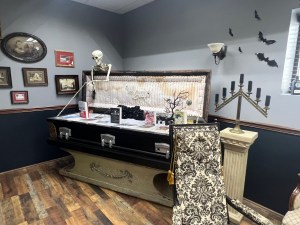
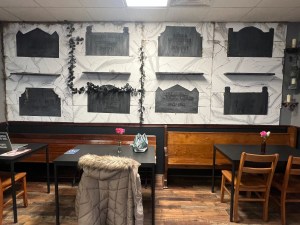
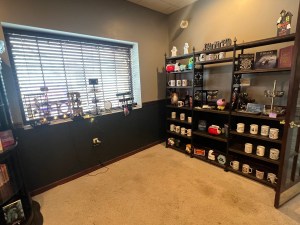
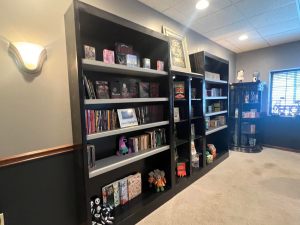
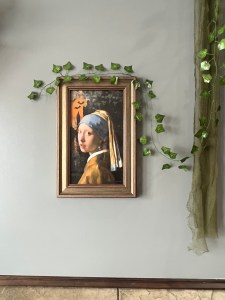
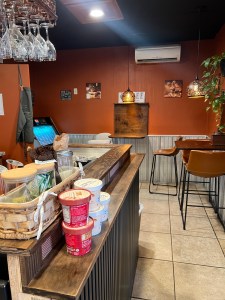
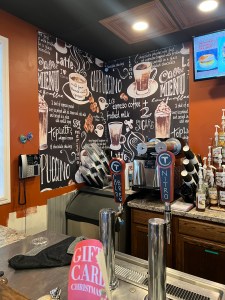
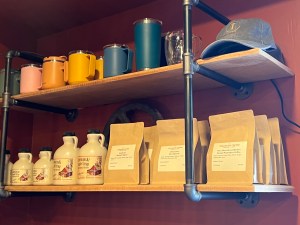
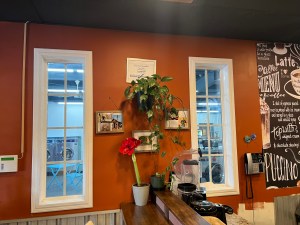
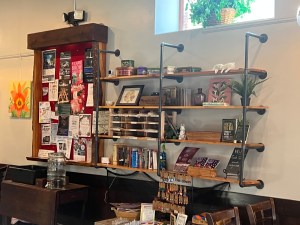
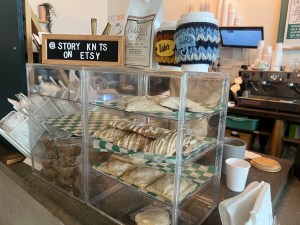
By the way, Bason is being modest. The addition of “& more” to their name is an understatement. The place is filled with knick-knacks, foodstuffs, and a vast array of local products. I saw the honey and ran directly to it. The honey deserves a review of its own. The taste of honey is a product of terroir every bit as much as wine is, and it’s a sum of the vagaries of life and growth, the way coffee is. The cafe was filled with arts and crafts, too, as well as cozy nooks. There was a calm here that warmed me after a long drive.

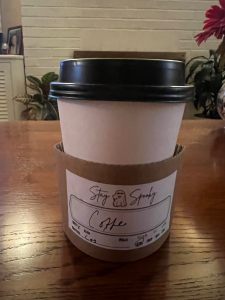
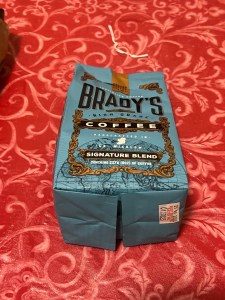
I ordered a typical roast called Farmhouse Blend. What a contrast it made to the coffee I had in Bloomsburg! Not in quality, but in character. Whereas the former was dense and dark, this blend was like a mouthful of breezy air. The package said, surprisingly, that this was a medium roast with a bit of dark added. It also advertised the roast as a breakfast blend. The latter description is more apt. There was barely a hint of astringency; only a general lightness pervaded the body of the product. A nuttiness of sorts manifested, but it was positively blithe, not earthy. The fact that they were able to do this with a medium roast speaks to a high level of care and sophistication from the roasters and brewers, likely due to a strong coordination between the two groups.

It’s odd in retrospect that I never visited Danville before. I’ve heard the name of the town all my life; my parents went to games here when they were in high school, and it’s mentioned in the context of everywhere else you might want to go around here. “Near Danville” is a phrase you’ll hear a lot. That means I’ll probably return, as I intend to explore this region further.

So, why did I pick Danville instead of finding another coffeehouse in or near Bloomsburg? It has to do with what I said beforehand about Danville seeming like a NEPA town. That comparison only goes so far. The architecture of Danville made that statement, but the town’s lifeways felt like a distinct offshoot of the rural sensibilities we’ve seen throughout the Valleys region and west in the mountains. Despite its proximity to Bloomsburg, Danville gave off a working-class vibe. Here’s another good example:

The Bason website makes it clear that coffee is the second priority for the owners. The first being Jesus. That would have been a bit surprising in Bloomsburg. Indeed, as I walked around Bloomsburg, I noticed a cultural consensus. The coffeehouses there were self-consciously postmodern, incredibly contemporary. Almost certainly the product of Bloomsburg being a college town, the shared cultural conceits nonetheless presented a challenge. If the coffee culture in Bloomsburg shares a zeitgeist, how distinct will the next shop be, even if it’s fantastic? I had to move on.

I’m glad I took that extra little jaunt back towards the Susquehanna River. Bason Coffee was distinct. Sure, there’s a ‘sameness’ to rurality, especially today. As much as postmodern liberalism has ossified and homogenized, rural culture has responded in kind, both sides defining themselves by what they are not. ‘Country’ culture sometimes achieves its own pastiche, almost camp value. That wasn’t the case here.

Not at all.

Bason didn’t lay a modern aesthetic atop a traditionalist spirit, nor did it lean into kitsch. We’ve seen that before, and although these approaches have obvious merit, Bason was a unique expression in its own right by being neither. It was just a coffeehouse. A classy place to congregate and commiserate. It didn’t wear its faith on its sleeve, unlike many others. The space was filled (to the brim, even) yet understated, sort of like a cottage in the woods (or the Hallmark Channel). If cottages were caffeinated, that is.

Here at The Coffeehouse Journey, we think that’s just how cottages ought to be.

I’m off to find a few more of those caffeinated cottages. I plan to move on to a more cosmopolitan place: The Poconos. Either that, or Scranton. Hey, if Dunder Mifflin calls it home, it’s worth a visit. Hopefully, Jim Thorpe will be on the list of places to visit on or right after Christmas/Yule/Solstice. If anyone has a suggestion regarding coffee culture in the far northeast of Pennsylvania, give a holler.

Until next time, stay caffeinated.


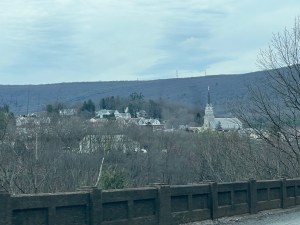
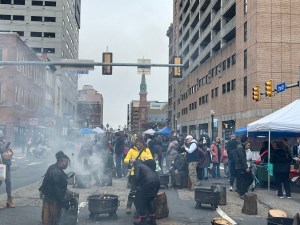
the street…

the town…

the church…

the edifice…

the entrance…

the stuff…

the seating…

the nook…

the machine…


Leave a comment

Posted by on December 6, 2025 in Uncategorized


Cafe Martha (Formerly Fog & Flame): Bloomsburg, PA

It’s funny, whenever I send a link to this blog to a prospective employer as a sample of my work, it rarely bodes well. There are no negative comments. There aren’t any comments at all, nor responses to my humble interview requests. My writing style isn’t conversational. I don’t write the way people talk because people write the way they think, and I don’t think the way many people do. I imagine that most professional writers would find this blog somewhat childish. I hope so.

I feel thirty years evaporate when I hit the road. 

I need to remember that. Maybe then, I’ll drive off into the countryside more often. If I do that, you’ll learn about more coffee, and so will I. In my defense, road trips are becoming increasingly challenging as autumn gives way to winter. Already, the ridgelines in northeastern Pennsylvania are capped with snow. A few thousand feet of extra elevation makes all the difference this time of year. Northeast PA (NEPA) is exactly where we’re heading on this leg of the Journey.

This entire adventure will be divided into two parts because I visited two distinct towns on the same trip through the mountains. Those mountains are a huge part of the draw, the story, and the history of this region of Pennsylvania. NEPA is just to the north of the Coal Region we visited before. It’s a continuation of the same belts of terrain, though, and the entire Anthracite region of Pennsylvania shares a stratum. Rocks here date mostly from Carboniferous times. From 350 to 300 million years ago, this area was home to dense rainforests that would transform into the coal we mine.

I should have said “mined.” The coal days are largely in the past, and this area is reinventing itself rapidly following a long period of middling survival and gradual decline. What remains are reminders of that past and hints of a transformative future. The Poconos are a great example of prosperity in northeast Pennsylvania, but the town of Bloomsburg is emblematic of small-town Pennsylvania’s embrace of change.

The sprawling town of Bloomsburg is notably home to Bloomsburg University. Called “Commonwealth University-Bloomsburg” since the year 2022, when it merged with Lock Haven University and Mansfield University, the institution has a history dating back to 1839, when it was known as Bloomsburg Academy. Since then, the name has undergone several changes, but the goal of education has been the same. That mission is written all over the town.

Walking down the main street, the horizon curves upwards to the front of Carver Hall. Flanked by trees with flame-colored autumn leaves, it’s archetypally collegiate. Student housing is advertised along Main Street, a bustling avenue lined with shops clearly catering to students. A library, theater, and post office are arranged in a line, as is a bevy of restaurants, pubs, and coffee shops. One of those establishments is Martha’s Cafe.

The coffee shop was known as Fog and Flame for over a decade until January of this year. That’s what Google Maps still calls it, as do the slowly fading letters above the large, beckoning windows. “Beckoning” may sound like florid prose, but take a look at the photo below. Now, imagine yourself as a student, not just falling in love with academia, but suffused with it. If you could see my bedroom and its ring of bookshelves, you’d know I didn’t have to imagine what that feels like. I am that person. Martha’s is very clearly engineered for people like me. From the bookshelf along the wall to the hardwood accents, it…Yeah, I’m sticking with “beckons.”

The coffee is locally roasted. Oh, yes, I’m getting right down to brass tacks. The coffee gets an immediate shout-out for being a local brew. Bellus Coffee is roasted in Bloomsburg. If you haven’t heard of it, that’s because it’s specifically a small-batch specialty roaster. Boy, are they serious! Listen to this quote from their website:

“Bellus” comes from Latin roots meaning “beautiful” or “to do”. It is our firm belief that we are not meant to sit idle but to act with faith to be a part of something beautiful. 

You know someone’s serious when they get philosophical. Describing what good and bad coffee tastes like on that same first page was a bold move, but it signalled a large measure of passion on their part. Really, though, half of the taste is in the preparation. The roaster has to be skilled, but so does the brewer. In the case of Martha’s, both “ends” of the coffee process were on point.

“Martha’s Blend” was a Latin American mixture, specifically. Almond, chocolate, and caramel notes were all advertised, and they were there; still, the most prominent of these was the caramel, which manifested as a mouth-watering smoky hint at the end of a buttery smoothness born of balanced acidity that stood out. It’s sometimes hard to make rich coffee “drinkable” for casual imbibers; however, everyone involved here did a noteworthy job.

Here’s another interesting thing about Martha’s that’s also true of many other Bloomsburg operations: It reflects the intellectual current of academic culture as it stands now. A prominent Pride flag was displayed, along with more subtle “tells” of a postmodern, countercultural vibe. Though if it’s the prevailing culture of a place, is it still a counterculture? That conundrum deserves its own post; what’s important here is the mood of consensus among growing minds as they ask the big questions.

Throughout this blog, we’ve seen the urban institution of the coffeehouse assimilated by a prevailing rural culture. Here, we experience the opposite: a reiteration of urban intellectual cultural motifs in a setting that might not be accurately described as “rural” at this point in history. In other words, Bloomsburg is a college town, through and through.

On the topic of history, the last photo in the set provides a glimpse into the past I mentioned. On the way here, the road was closed to let a train chug past. It was brief, and it was certainly not hauling coal. There were passengers. They waved gleefully at the folks like me who got out of our cars to snap pictures of the passing. We waved back, like we would have when we were children, and all the little joys seemed magnified by the compressed years of so-far brief lives. Daring to still feel that way is a counterculture.

I imagine we’ll see more reminders of Pennsylvania’s past at nearby Danville. I made an unexpected stop there on the way back from Bloomsburg. In that post, I’ll tell you why. I’m not sure if Danville counts as NEPA. Less than ten miles from Bloomsburg, it feels like a transitional species between coal country and the Susquehanna River valleys. We’ll see what that unique region has to offer. I’ll be writing that entry in about a week.

Until then, stay caffeinated.


the college…

the heritage…

the town…

the cafe…

the ambience…

the art…

the stuff…

the roast…

the road in…

the train…

 
1 Comment

Posted by on November 22, 2025 in Uncategorized


Pressed Coffee & Books, Pottsville, PA

Work sucks. Not just mine, either. Work has the tendency to interfere with good times all around. This coffeehouse was recommended to me by a dear friend. My plan for the past several weeks had been to come up here and go with her. A few weeks ago, her car broke down. Then, I got swamped with work. Then, her commitments resurfaced again. Finally, I decided to just make the run myself…and dedicate this post to her. Not giving her name unless she wants me to. So, here it is, my long-planned Pottsville coffee run.

Pottsville is one of those towns in northeast Pennsylvania that really wears its coal-mining heritage on its sleeve. The Journey has taken us to towns in the coal region before, but never so far north into the heart of it. Here, ‘Central’ Pennsylvania merges with the ‘Upstate’ region made famous by The Office. Like its cousin, Scranton, Pottsville is a post-coal-boom town. Unlike Scranton, it’s nestled into a cozy valley between ridge upon ridge of anthracite-laden mountains.

All of this gives Pottsville a character both familiar and unique. There’s no mistaking its heritage. There’s copious infrastructure for a town of Pottsville’s population. The small city has a compact and urban feel. There’s a thriving downtown mixed with more hardbitten streets. Pottsville sits at the junction of several roads. Traffic is atrocious, as is the cost of parking (likely needed to keep those roads maintained). There are also a lot of places to go; as stated, the main drag is thriving, even as the cars are somehow more numerous than the pedestrians. I got the impression that there’s a light and dark side to this city, much as the encroaching autumn itself is bright and shadowy at once.

A definite bright spot in Pottsville is Pressed Coffee & Books. It’s been here for a long time (about seven years, I was told), but it’s not that well-known outside the Pottsville area. That needs to change. Pottsville is far more famous for being the home of Yuengling, a massive brewery that sells its beer nationwide. Yuengling is known as a working-class beer in a town of working-class folk. It’s down-to-earth, and, in some ways, a bit conservative.

None of those monikers apply to Pressed. The word I would choose is ‘cozy.’ Another good word is ‘academic.’ Bright, light, airy. Stars Hollow. That’s what I’m thinking of. Did anyone watch Gilmore Girls? Remember the town of Stars Hollow and the ivy-decked halls of Yale? That’s what Pressed made me think of immediately. Long before I spotted the sign pointing to books, a feel of autumn at college permeated the cafe. If you know, you know.

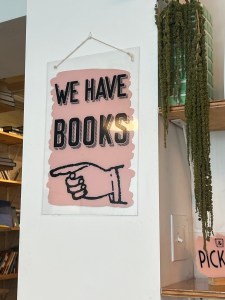
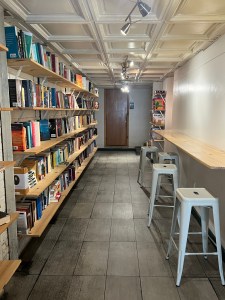
Oh, but of course I did follow that sign. My bedroom is a library. When I see a book that I really like, there’s this nagging voice in the back of my head warning me that if I don’t buy it, I may never see it again. That’s led to books being piled under my bed, in my car, etc., on numerous occasions simply for lack of shelf space. I arrived just as the last of the first batch of coffee had been sold, and new coffee needed to be brewed, so I wasted none of that time.

Thankfully, for what should be empty crawlspaces in my house, I resisted the urge to buy any of these. A lot were romantic, or fantasy, or romantic fantasy. Few were the sciencey works I normally crave (though there were some venerable classics on the shelves), so I could take a breath and put the wallet down…at least for now.

Something else I spotted: A large machine in the corner. Apparently, Pressed has an electronic coffee roaster. It is among the first of its kind, and I’ve never seen another in all my travels around the area. The times, they are a-changin’ indeed. I wasn’t entirely sure at the outset whether they bring in their coffee from elsewhere or roast it themselves. It was the name that threw me off: Downtown Roasters. Downtown could be anywhere, so I had to make sure it was a local creation. It is.

I got “The Coaltown.” It was a blend of African and Central American roasts; Ethiopian and Guatemalan, specifically. I imagine you’re thinking the same thing I am: What an odd brew. Ethiopian coffee tends to have a sharp, citrus flavor. Guatemalans are the opposite in most respects, manifesting a rich chocolate or even earthy palette.

I had no idea what to expect with this. As it turned out, Coaltown was exactly what I should have expected: a total blend of both regions. I described it in my head as a maelstrom. Constituent flavors duked it out with each other in a hurricane of juxtaposed notes. Surprise: It actually worked. The Guatemalan mellowed out the harshness of the Ethiopian, and the Ethiopian contributed zest to what would otherwise have been a full-bodied mouthfeel exclusively.

It wasn’t just the shop itself exuding an erudite serenity. The staff all had that air about them. Realistically, it’s probably more accurate to say that the shop embodied the kind attitudes of the people who own it, began it, and staff it. This coffeehouse is obviously a labor of love. Finding places like this is mine.

Until next time, stay caffeinated.


the town…

the statuary…

the entrance (and construction)…

the goodies…

the window seating…

the machine…

the beans…

the promise…

the delivery…

the autumn bliss…


Leave a comment

Posted by on October 19, 2025 in Uncategorized


Stone Mill Cafe & Bakery, near Timonium, MD

I always have a backup plan. Whether I’m packing extra clothes in the trunk ‘just in case,’ or I’m stuffing extra precharged batteries in my pocket to stave off the consequences of a phone losing charge at exactly the wrong moment, I like to take a cue from Odysseus and never be at a loss. Sometimes, that looks like choosing a contingency coffee shop.

When I planned the trip to Cafe Luli, I wasn’t sure there was a Cafe Luli. The website hadn’t been updated, and Google Maps couldn’t produce their hours. I wanted to plunge that deep into the Baltimore countryside, but I didn’t want to waste gas if there was nothing there. I had to find a place that looked promising, but which wasn’t too far off the Beltway. That place was the Stone Mill Cafe and Bakery just outside Timonium.

The name alone sounded auspicious. Stone mills are where you make craft bread. They’re historic. The image of a stone mill easily dovetails with the thought of sitting by a window with a steaming cup of coffee and contemplating things. Assuming that was the intent, I screenshotted the directions and set off. Cut to a few hours later, the entire exercise was unnecessary. Cafe Luli was there, and it was fabulous. But that left me wondering: What about the other place? It was on my way home, and I couldn’t just do one coffeehouse when two on the same stretch of highway were viable options. So, I decided to stop by Stone Mill after all. I’m glad I did.

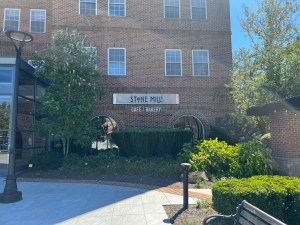
Oddly enough, this was yet another coffeehouse in a plaza. The plaza can’t possibly be new, since I’d learn that the Stone Mill Cafe has been here for over thirty years now. It sits along famous Falls Road, as does the plaza. Falls Road is a major thoroughfare in suburban Baltimore, connecting a multitude of similar shopping malls, service plazas, train stations, and hotels that cater to the thousands of travelers who pass through the region every day.

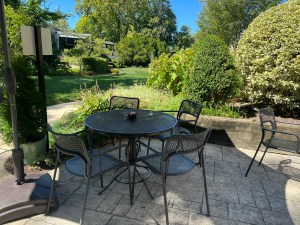
The Stone Mill, in this context, is something of an oasis. You’ll see what I mean if you look at the photos below. The building is trying its level best to be cozy, and it does as well as a tall brick edifice can. The garden and archway help. Oh, yes, there’s an arch leading through a green space strewn with seating; the path leads to the entrance of the coffeehouse proper.

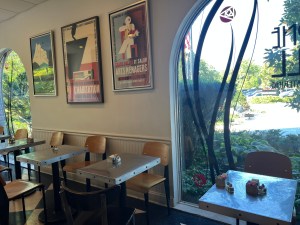
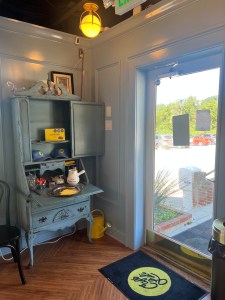
The interior was not at all what I had been expecting. I don’t even know what to call it. It was a hodgepodge of features. There were tables beneath fascinating works of art. There was a busy counter fit for mass coffee production. Then, I found a large, circular window looking out over the green space I’d just come from. Dreamlike. That’s the word I’m looking for. You know those dreams you can’t forget because they’re such a bewildering combination of images that they stay in your waking memory? That’s Stone Mill.

Regarding the coffee, my expectations had gone through a rollercoaster ride on the way here. First, I thought ‘Stone Mill’ meant something self-consciously fancy. Then, when I saw the plaza, I thought this might end up being some cheap, generic Arabica fit for travelers more thirsty than choosy. They defied me on both counts.

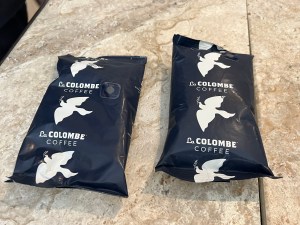
The coffee was from La Colombe, a roaster in Philadelphia. They’re famous for being a key member of coffee’s Third Wave. ‘Third Wave’ coffee is an academic term for what we’d call craft coffee. Specialty, boutique roasts only really burst into the Western mainstream during the latter days of the hippie era in the 1970s. For perspective, the First Wave includes diner coffees. The Second Wave emerged in the heyday of the cultural revolution in the 1960s, with a focus on spotlighting its international sources. La Colombe wasn’t founded until 1994, but it was the 90s (far more than the 70s) that are associated with what we consider ‘coffeehouse culture’ today.

I didn’t really get a coffee. I got a soup. That’s how strong the coffee they gave me was, and indeed, they’re proud of having the strongest coffee in the area. It immediately reminded me of something I’d had a few months ago: Turkish coffee. Turkish coffee is known for being so thick that you have to wade through the grains at the bottom of your always-tiny cup. Stone Mill wasn’t making it quite that thick, but the flavor profile was so deep it was almost smoky. It was also intricate, with a distinct green pepper note spicing up the rich, leguminous base.

I love pleasant surprises. Alright, we all do, but this one came after driving through the Maryland woods all morning, so it gets bonus points.

As I write this, I’m planning what region to showcase next. I’m also praying for more rain to help the last vestiges of my garden last a few more weeks into autumn. Please join me in both endeavors. Here’s the travel dilemma: I was originally considering a jaunt to Delaware, but a trip northeast amended that plan. There are too many interesting small towns up there to ignore. We’re headed back through coal country, the Bloomsburg area, and hopefully on to the Poconos! I’m an Office fan, so don’t be shocked if the Journey winds its way up to Scranton and into that…well, you know, that New Jersey/New York, Parsippany-type place. Oh, I have no clue what to call that region. Help me out here, people. Anyhow, that’s where the Journey’s aiming for next.

Until next time, stay caffeinated!

the facade…

the grand entrance…

the setup…

the art…

the whimsy…

the seating…

the beans…

the data…

the great outdoors…


3 Comments

Posted by on September 19, 2025 in Uncategorized


Cafe Luli, Stevenson, Maryland

Beep. Beep. Beep. That’s the sound I heard about a week and a half ago outside my window at 6:53 AM, heralding the beginning of a construction project. A new set of sidewalks is being installed across from our house. As of the time of this writing, the worst of the drilling appears to be over…for now. Bear in mind that two weeks ago, Fort Indiantown Gap did live fire exercises for a few days at a time. They didn’t start their work until 8:00 AM, so it wouldn’t disturb people. Just some food for thought.

Thankfully, the people doing the cement pouring were kind enough to delay making noise as long as possible, even though their work order apparently required them to be there shortly after 6:00 AM. It’s also not every day, which is a blessing (or perhaps an act of mercy on their part). We still don’t know how long it will take to finish the project, and I’m left stewing over the fact that the one place I go to hide from the rest of the world is under siege by it. That’s a bad feeling. I needed a good feeling.

That good feeling came when I ran off to Maryland. It was warm. It was Saturday, and on Labor Day weekend, no less. The morning had been blissfully silent. One issue: My car was low on oil. I didn’t let it dissuade me. I jetted off to the nearest auto body shop, grabbed some 5W-30 oil, and set off down Interstate 83 towards Baltimore. I’m glad I did.

OK, I wasn’t actually going to Baltimore. I’ve been doing a coffee tour of suburban Baltimore and the surrounding countryside. If you remember, we’d just visited outer Towson when a local coffeehouse interrupted the process by springing up east of Harrisburg. Google Maps revealed something I hadn’t noticed before: a small, very French-looking cafe sitting in the countryside north of Pikesville (a suburb of Baltimore known for its Jewish community and endless lunch spots).

Info about Cafe Luli is scant and contradictory online. One page says they’re coming soon; another says they’re already here, and the social media sites haven’t been updated in a spell. There was no phone number, either. I was concerned that once again, a promising cafe had opened and closed before it could gain a following. As a matter of fact, I had a contingency coffeehouse standing by on my itinerary in case this one no longer existed. We’ll get to that later.

Cafe Luli does exist. It exists, and it exceeded expectations. It’s located in a plaza, and I’ve had mixed experiences with coffeehouses in plazas. They tend to be commercialized more often than not, and the traffic absolutely obliterates the coziness one expects from a coffeehouse. That wasn’t a problem here because Cafe Luli is nestled in a little alcove near a golf course, separated from the Baltimore beltway by a few dense little woodlands and more than a few upper-class residences.

I couldn’t find a town of Stevenson, per se. It was more of a collection of homes. It is home to Stevenson University. It was once known as Villa Julie College. I had received a letter from them once, back when I was just about to graduate high school, and the brochures started coming in. There was no time to visit. The coffeehouse was going to close at 3 PM, and it was already 2:15.

The cafe looks super European. I love that. I like homages to Old World culture. There’s a little restaurant in Harrisburg called Au Bon Lieu that replicates a Parisian cafe. Cafe Luli does the same. It doesn’t go overboard, though. There are nods to France, but with a minimum of kitsch. The relative smallness of the space is more than made up for with a lovely, intimate set of tables in a second-floor area. Even here, the decor is minimal. The accoutrements you see in the photos below were on the bathroom and stairwell walls.

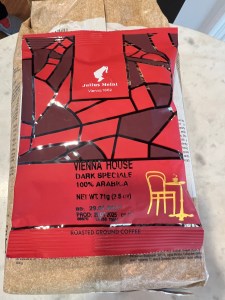
The coffee hailed from an unexpected locale: Austria. Julius Meinl is the name, and it’s been in operation since the mid-19th century. Now, that’s provenance! At that point, I was grinning with victory over the fact that this place turned out to be open despite all odds. It’s not just open; it’s thriving. I asked for the closest thing to a typical house blend. What I received was hard to place. Oh, it was expertly crafted, of that there’s no doubt. This roaster is no fly-by-night operation. What I mean is that the blend was so…blended that it was hard to tell where the beans might have originated. There was a mild earthiness and chocolate-ish hints, but they were something of a background. A slight leguminous quality was also there. The real kicker was the light whisper of citrus on the end, which wasn’t enough to connote an African origin for some of the beans, only to tease a vague possibility. I’d bet there’s Sumatran DNA in this roast. The robust body alone speaks to it. The coffee was called Danube Delight, but beyond that, the contents were a mystery.

I spoke to a rather brilliant coffee lover on the staff (I believe her name is Kay, but I’m horrible with hearing names, remembering names, remembering faces, or recalling general short-term and long-term events). She and I kibitzed about the flavor of this particular roast for a while. We both agreed that it would be wonderful to taste European-grown coffee and lamented the impossibility of growing beans in Europe. We also concurred that our ‘medium dark’ is ‘dark’ to most other people. Coffee aficionados (meaning the coffee-obsessed, if we’re being honest) tend to think alike.

Cafe Luli was not the end of the Old World charm present in this plaza! There was a wine shop called The French Paradox right next door. They were having a tasting that afternoon. Having gotten my uppers, I resolved to partake of some downers and sampled five Rhone wines. After letting the wine wind its way through the old liver, I departed for my next stop: the backup coffeehouse. That exceeded my assumptions as well, despite its location in a (you guessed it) plaza.

It’s interesting, isn’t it? We’ve seen many instances of a coffeehouse in a rural or quasi-rural setting adopting a modernistic aesthetic while leaning into rural customs and cultural conceits. At Cafe Luli, the opposite is happening. Here, we see an extrusion of something quintessentially urban into the fringe. In our society, all things French have long been a code for sophistication. I’d say the association is well-deserved. Austria deserves it, too. I’ve spoken at length regarding the Enlightenment and the debt it owes to coffeehouse culture. Paris and Vienna were hotbeds of a cosmopolitan worldview that would help evolve the collective consciousness of humanity. Those heady philosophies were digested and debated around mugs of coffee. Revolutions were brewing. A bit of that heritage now sits across the road from the first rolling farms of the rural Maryland countryside.

Oh, and I learned something else: This cafe has only been around for a short time. It was planted just after Easter. It’s less than a year old. That’s a stark reminder of how unstoppable coffeehouse culture is. Our troubles may change. Our needs remain the same. For a lot of us, one of those needs is an exceptional cup of coffee.

Until next time, stay caffeinated!


the front door…

the cafe…

the bric-a-brac…

the upstairs…

the wall…

the beans…

more beans…

more details…

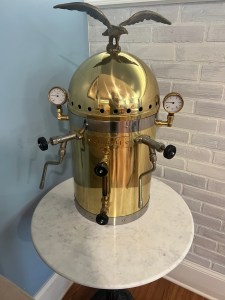
the old machine…

the thoughts…


Leave a comment

Posted by on September 4, 2025 in Uncategorized


White Magnolia Coffee Company, Frystown PA

My era of peaceful sleep may be coming to an end. Road construction is an endless affair in Pennsylvania, and it doesn’t end with residential zoning. Our sidewalks require replacement, and there’s no telling what hour of the morning that will “require” the workers to start beeping and drilling in front of my bedroom window. All I can do is hope the township shows some mercy, and in case it doesn’t, savor every minute of productivity I can. I should have done that anyhow. Maybe there’s a lesson there.

The White Magnolia Coffee Company is worth expediting. It was also worth postponing a return to the Baltimore suburbs — at least temporarily. I thought I’d been to this town before. It’s called Frystown, and it’s a few miles south of Interstate 78 on the way to Allentown. I remember doing a sweep of coffeehouses here several years ago, slowly heading west towards Reading to sample what the countryside had to offer. Jonestown, Myerstown, Bethel. I visited them all, and you tagged along.

Why I hadn’t noticed this place before is simple: It’s incredibly new. White Magnolia has only been open at this location for two short months. They’ve only been operational as a coffee truck for the past two years. That makes them a product of the coffee renaissance that’s materialized over the past half-decade throughout rural Pennsylvania. And of course, since shining a light on that culture is a major goal of this blog, I had to jet out on the road to visit this location as soon as the blip appeared on my map app.

Frystown is rural in the extreme. The photo below shows almost the entirety of Frystown. In this town and its surrounds, farming isn’t just done on an industrial scale. It’s a lifestyle that saturates the days of the people who work these rolling fields. It’s honestly one of my favorite regions of Pennsylvania. It’s oddly tranquil. That’s why. No loud noises, unless you count the horses. Fields lead to churches, which lead to more fields and more churches.

Speaking of churchly life, religion is subtly on display at White Magnolia, from the attire of the staff to the inspirational message I found displayed, referencing God. The building itself, though, was a work of modernity. From the bright colors to the beautiful stonework and glass accoutrements, this coffeehouse could have been a modern art museum. It’s not the first time on this Journey that we’ve seen that juxtaposition of cultures. If you know me, you know I like it. If you know me, you also know why.

Fun story about the name: Apparently, the logo came first. I was informed that someone drew a lovely picture of a white magnolia as a possible logo (likely when they were first brainstorming the cafe idea), and the name references the picture. I thought the magnolia reference seemed strangely out of place up here in Yankeedom. Nothing’s out of place when creativity runs wild.

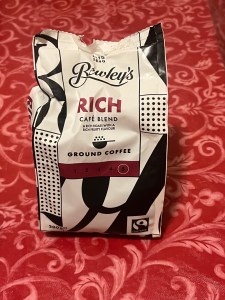
The coffee shocked me in several ways. There’s no other way to put it. I hadn’t imagined that a cafe so recently opened and in such a rarely-traveled location would invest in a boutique coffee like Mama Java, but there it was. More on that brand in a minute. It was certainly a proper Guatemalan in every respect. A deep chocolatey flavor and grounded, leguminous quality were on prominent display. One thing absent was bitterness, even the normal amount. The lack of astringency could have resulted from water quality. They’re on a well. There’s a sign on the front window that tells you so in case it makes you antsy. Nobody inside seemed to care, and it was quite busy.

I’m not surprised if you haven’t heard of the company from which this coffee originated. Mama Java is based in Carlisle, PA. My mind went to one place: Oh, I see, a feminist statement. The words we use are funny. Often, there’s a difference between a word or statement’s textbook definition and that of the cultural consensus crafted around it; a consensus built by a combination of trend and agenda. When you think of ‘feminism’ or ‘women’s issues,’ what do you think of? The words are coded through ideological curation.

The owners of Mama Java aim to challenge what they call the “narrow definition of success” in contemporary society. That line got me intrigued. They assert that being a mother is “one of the most impactful jobs in the world.” For every bag of coffee purchased, a dollar is donated to Lifewater, a Christian water charity that helps those in poverty, especially mothers. Here, we see a simultaneous critique of the free market and an acclaim of motherhood as something of objective value. The centrist consensus in our culture tends to aver the opposite.

In the postmodern consensus, recognizing nothing as ‘right’ or ‘wrong’ or of unassigned ‘value’ is the ultimate liberation. Everyone gets something out of that, at least on the shallow surface. Economic conservatives get to be greedy. Social liberals get to be libertine. Nobody gets judged, but they all get to judge. Unfortunately, reason and benevolence become casualties of the Culture Wars. Mama Java flips the script on this absurdity by rejecting both ideas at once: They believe in a world made fairer by recognizing transcendent values.

At the beginning of this Journey, I made it clear that I didn’t want to review religious coffeehouses. The coffeehouse as an institution is a child of reason, not faith. Reason is the most effective tool for discerning good from evil. Witness the rational discernment of natural rights from natural law that led to the revolution, resulting in the American Constitution. I still stand by that position unreservedly. However, when the defenders of rational ideas are people of faith (like the folks behind Mama Java seem to be) who defend those ideas because they care about doing good, the waters get muddied.

As we coffee drinkers say, here’s mud in your eye. It comes courtesy of some very good people at Mama Java and White Magnolia.

The next entry is likely a few weeks away. That depends on my insomnia, my work schedule, and the loud nuttiness outside our houses. I want desperately to head south to the Baltimore suburbs and write about a series of coffeehouses near Pikesville. I hope that will be September’s adventure, because after that comes autumn, and with autumn will come a new direction for the Coffeehouse Journey. Oh, I meant that literally. The direction is probably northeast into the Poconos.

I’m also planning an advertisement blitz to get the word out about what we do here and why. The audience here is small, and in a way, I love that. Coffee culture outside of hipsterdom is niche, and as long as something remains niche, it remains pure. That said, it wouldn’t hurt to spread the message beyond Central Pennsylvania. Feel free to give suggestions!

Until next time, stay caffeinated.


the sign and street…

the vittles…

the seating…

the wares…

the future…
the roast…

the facts…


Leave a comment

Posted by on August 25, 2025 in Uncategorized

 
Aside

Hi all. It’s been a minute. Between concerts and festivals, I’ve been going everywhere but coffeehouses lately. Fields, tents, theaters, trainyards, and rivers. I’ve been to those. Uppers have taken a backseat to downers as beer festivals, music festivals, and jam band gatherings have peppered the free spaces of my schedule for the past month. It couldn’t last forever.

I said we’d go deeper into Maryland, and that’s what we’re doing. From the Baltimore countryside, we’re heading south into the Timonium and Towson areas. Actually, we’re sticking to Timonium, but this story also involves Towson. We’ll get to that. Timonium is well known to the science fiction and fantasy fandom (of which I’m a part) as the town that hosts a large number of annual conventions. I remember a story in a book about a sci-fi author once trying to pass off a fake chemical element named Timonium in a brainstorming session (apparently not realizing most people at the convention actually knew where and what Timonium, the town, was).

This Timonium is a maze of plazas and hotels. Cockeysville to the north is the same. That’s why I didn’t take a photo of the area itself: There isn’t all that much to see. Timonium is more functional than picturesque; it’s where you stop to rest on the way to all those lovely vacation spots near Inner Harbor. That said, somewhere between all the big-name coffee shops and standard hotels, in an otherwise nondescript plaza, stands the caffeinated wonderland called Aveley Farms Coffee Roasters.

Before we begin, it’s essential to understand that Aveley Farms is more than just a coffee shop. There’s a microbrewery here, too. An operation called Diamondback Brewing Company also shares this space, aiming to blend coffee and beer culture. Diamondback apparently isn’t the same company, but they are working in partnership with Aveley to create a unique fusion of beverage cultures. This isn’t the first intersection of societies we’ve seen on this journey, as rural life meshed with the urban institution of the coffeehouse in startling ways throughout Amish Country up north.

The staff was kind enough to let me sample the product before I made a purchase. Let me say this at the outset: These people know their coffee. The staff, I mean. The barista/os know all the lingo and the expectations in terms of roasting characteristics. An example of that knowledge was evident in the first of two coffees I tried: an Ethiopian Yirga Chefe (the Halo Beriti, pictured below). I remarked that the citrus flavor was less pronounced than expected, and the fellow handing me the coffee let me know it was a washed coffee. Washed coffee refers to beans that have been soaked after harvesting to remove impurities. This has the added effect of balancing acidity.

The second coffee I tried was more in line with my normal preferences. It was a Brazilian medium-dark (most of Aveley Farms’ offerings trend towards medium-dark, I discovered), displaying all the characteristics of a well-roasted Brazilian. The nutty notes were especially prominent, with the chocolate hints only really showing their power on the back end of the mouthfeel. That mellowness makes for an especially drinkable cup. Unfortunately, it was only available that day as an Americano/Espresso since they rotate their coffees constantly to keep the experience fresh. I get it. But it left me in a quandary as to what I’d actually order.

The answer was clear: I’d get the Ethiopian. Normally, citrusy roasts are not my cup of…well, you know. I was in for a pleasant surprise. I mean, it shouldn’t have been too much of a surprise after my initial taste-test, but I was still unprepared for just how well this roast would present itself in a full serving with cream and a bit of sugar. There was not one iota of citrus harshness in that cup. The fruit instead offered a strong backbone (as opposed to a mere finish) to a balmy and harmonious mug.

Oh, yes, Towson. Aveley’s flagship shop stands in nearby Towson. Aveley Farms itself has been around since 2016, but this shop is brand new, having opened in 2024. I imagine Towson must be a coffee haven, given that famous Towson University is there. I’ll have to pay the actual town a visit sometime soon, assuming I don’t just make my next trip one to Baltimore and points south. Of course, we’ve already been to Baltimore on this Journey (remember Red Emma’s?). That doesn’t mean there’s nothing new to explore, though. In fact, Aveley Farms served as a poignant reminder of the quiet revolution in craft coffee that has unfolded over the past five years.

This means our next stop is anyone’s guess. The festival scene isn’t really winding down; rather, it’s morphing. Fewer big concerts and public gatherings, more niche events and country fairs. Did you know that Pennsylvania has 109 agricultural fairs, including the Farm Show? They might be worth a gander. You’ll know by the end of next month. Until then, stay caffeinated!


the plaza front…

the snazzy interior…

the equally snazzy beer…

the vittles…

the roastery…

the roast number one…
the roast number two…


Aveley Farms Coffee Roasters

 
Leave a comment

Posted by on July 28, 2025 in Uncategorized


Maryland Trip #3: Crossroads General Store and Music House

As I type this, the summer solstice is just beginning. Pennsylvania is coming out of a long period of rainy weather, and I’m emerging from an equally lengthy period of lethargy. The one had nothing to do with the other. I feel energized by the kind of weather that everyone else thinks is dreary. It must be the English ancestry. Melancholia has throughout history been credited with imparting a distinctive form of inspiration. I second that assessment.

The last leg of my trip to Maryland, about three weeks ago, is still fresh in my mind, though. If you’ll recall, I was in a state of confusion. There was a discrepancy between what my map said (Falls Road General Store existed in the town of Whitehouse) and the reality on the ground (two different stores existed). Having just left shop number one (The Tin Rabbit), I looked both ways and ran across the street to the current general store: Crossroads. Whew!

Crossroads is aptly named. It’s at a relatively busy intersection of several major roads, though aside from the general store and an old barn, there isn’t much here to see (unless you count the bucolic beauty of Maryland’s countryside). Even so, I can only imagine the number of people who travel through this area on their way to somewhere else, desperately in need of coffee and carbs. That’s where Crossroads comes in.

If I’m interpreting correctly, the process of moving the general store across the street from its original home (across the street) began in November and finished up this January. It must have been quite an endeavor. After all, it’s not just coffee and sweets being sold here. As I was to find out, there was something very special about this general store: It’s also a general store for musicians.

When I walked in, I have to admit, I was a bit underwhelmed. There didn’t seem to be much for sale that I was interested in, and seating was minimal. Things are still clearly in the process of development following a rapid move in an uncertain economy. As I was pacing about, ready to get my coffee, take a few photos, and leave, the barista suddenly asked: “Do you want to see the upstairs?” Of course I did, though I had no idea what to expect. Sure, there had been a mention of music on a banner waving in the breeze outside, but nothing musical was to be found on that first floor. So, with a bit of skepticism, I walked up the stairs.

I’ve never seen a collection of musical instruments and accoutrements this extensive outside a studio or specialty shop. Upon every wall and in every nook hung dozens of stringed instruments and accessories, including an entire alcove filled with amps of differing size and sophistication. I was awestruck. I played the flute in middle school, but I never got deeply involved in the ‘scene’ of professional musicianship. For anyone who is, this place would be akin to a candy store, I’m sure. I took special care not to spill a drop of coffee.

But what of the coffee?

Looking below, you’ll see that the roast comes courtesy of Ceremony Coffee Roasters. Appropriately enough, it’s a Baltimore roaster. Right next door, geographically speaking. The thing is, they’re not what you’d call a ‘craft’ roaster. Ceremony offers wholesale options for large-scale buyers, and the size of the bag I photographed attests to the scale of their production. That said, Ceremony does everything it can to brand itself apart from other roasters of similar scope. I admire that. It’s hard to brand a large roaster as distinctive (because mass appeal is the point), but Ceremony does a fine job of it.

The first sip still had me worried. After all, large roasters tend to be a bit generic. And you know, this might very well have been if not for the effort of the baristas. The dark roast I had was savory all right, with nice acid structure, but it was a bit astringent…or, rather, it would have been astringent if the person who made it hadn’t left it sitting just a bit ‘too long’ after percolating. Freshness is relative. Some coffees gain backbone if they’re left in the pot for a while. That’s not staleness. That’s maturity. Sometimes, you’ll make coffee with hard water. Sometimes, you’ll use too much water and too few beans, in which case, the finished product will be limpid. Being a good brewer is knowing how an individual coffee responds to a specific set of parameters. The baristas were young, but they seemed to have good intuition. That’s worth a shout-out.

This trip inspired me to do one thing: take more of them. Stasis leads to ennui. I need to see some new sights and do some new things. That’s what the festival season is best for, and we’re right in the heart of it. The direction will therefore be stochastic. That’s ‘random.’ I’m heading wherever the festivals and events take me, and that could be anywhere in a two-hundred-mile radius. If you have any good suggestions for summer coffee spots between, say, Delaware and New York, I’d love to hear them. Look for another update in three to four weeks…weather permitting.

Until next time, stay caffeinated.


the outside…

the window seats…

the brews…

the beans…

the tunes…

the sounds…


1 Comment

Posted by on June 20, 2025 in Uncategorized


Maryland Trip # 2: A General Store?

Oops. That’s how some of the best adventures start out, right? This ‘oops’ wasn’t my fault. Google Maps struggles to keep pace with the rapid changes in the coffee industry. See, I was heading north on Route 25 in Maryland after leaving Veloccino. There was another cafe (apparently) only a few miles up the road, built into a general store. Some of that was true.

There are, in fact, two general stores across the street from one another. Well, kind of. One is focused on antiques, and the other on immediate necessities, although both cater to both. It’s confusing. This post will be about the one I thought was the main coffee purveyor. Though, as we’ll see in a minute, both have coffee, albeit in different forms.

Both are located in the tiny town of Whitehouse. It consists of exactly one intersection. Despite this, it’s oddly charming. There’s a gadget repair shop on one side of the road. There are a few old barns and lovely farms. Then, there are the two apparent general stores, which are somewhat less general than you might think.

My initial plan was to head to Falls Road General Store. Well, there’s a building here, but it’s something entirely different. This is The Tin Rabbit. It’s an antique shop and gift store with room after room of items from yesteryear. Following a grand opening in March, they’ve rapidly expanded into the space formerly held by the general store. They also sell coffee…but not brewed. An entire row of exotic brew sits atop a shelf next to a curio cabinet. The coffee came from Vashon Island Coffee Roasters in Washington State. A whiff was as much as I got. It’s not for sale by the cup…yet. The woman behind the counter told me that something special was on the horizon: coffee tastings.

Needless to say, I reassured her that I’d return for that little treat. I checked their Facebook page, and they just recently planned their first flea market for this Saturday. That’s getting pretty close to ‘festival’ territory, so I wouldn’t be surprised to see The Tin Rabbit out and about at events in the area. She was really nice about letting me in on where else to get coffee around here. As it turns out, the general store is right across the street. What did I find there? You’ll just have to wait and see. Until then, stay caffeinated.


the logo…

the curio shop…

the coffee…


Leave a comment

Posted by on June 13, 2025 in Uncategorized


Maryland Trip #1: Veloccino Bike and Coffee in Butler, MD

I’m not hip. I’m not exciting. I’m not ashamed, either.

Few people read this blog. Grammarly bombards me with AI suggestions regarding ‘clarity’ and ‘conciseness’ in my writing. Prospective employers probably read it, laugh at my lack of simple workaday wordplay, and never give me a second thought. My style isn’t readable, apparently. It isn’t trendy. It’s not too cool for this school, and, in fact, it’s considerably uncool by the estimates of any school. I’m beyond caring. No stock turns-of-phrase or apt similes flood the noosphere from my keyboard, and you won’t get the impression that I’m a sophisticated tech-head with degrees out the proverbial wazoo, because I’m not one. .

That matters less than it ever has, if it ever has.

What matters is our odd little passions. Coffee is one of my passions. So is writing. Philosophy is another, especially rationalist philosophy. So is observational astronomy. So is paraphysics. So is beat poetry. All of those things bore most people, but for those of us who occupy those existential niches, life is fascinating in a way those outside the ‘loop’ don’t know. Somewhere, someone is engaged in a hobby I find wholly uninteresting but which, for them, constitutes the very spice of life.

Cyclists. Cyclists are doing that. From my childhood, I had no interest in riding a bicycle. I can’t balance on them; I’m afraid to try, and my feet serve me perfectly well, thank you. My cousins, on the other hand, live for powering their shiny aluminum beasts over the next mountain just to prove they can do it. They biked all the way to our family reunion on several occasions, over 50 miles of steep ridges and humid valleys. I get the distinct impression that most of the customers here are like my cousins: hardcore.

Veloccino has been here for around ten years. I never knew. I should have known; I mean, it’s fairly close to the interstate, and I’ve made the trip to Baltimore fairly often. Readers might recall my trip to Red Emma’s coffeehouse in downtown Baltimore nearly a decade ago. Even so, we’ve all seen that something as simple as making a right-hand turn off the main drag can take you into undiscovered country. That’s what happened to me.

I can see why there’s an avid bicycling culture here. Low, grassy hills seem to roll forever. That’s another thing I should mention: We’re no longer in the Appalachians. We’re in the Piedmont. The countryside north and west of Baltimore (in which this cafe and its town sit) takes some time to merge with the Appalachians again in the western portion of the state. Until then, the farms and lowland forests make a gentle tapestry across the landscape. Small stone buildings and old barns are everywhere. There’s a lot of history here.

The town of Butler is…small. It’s a tiny village, really. The photo shows almost everything there is to see, except a smattering of suburban homes. Right in the center of it, though, is Veloccino. As soon as you pull into the parking lot, the focus becomes apparent. A massive bike rack abuts a covered picnic area. It must be a welcome sight for anyone who’s pedaled dozens of miles in the cold winters and sweltering summers that near-coastal Maryland sees.

The flavor of the shop may be local, but the coffee’s flavor hails from far afield. Stumptown Coffee Roasters is a product of Portland, Oregon. Wow, Grammarly even has an issue with how I wrote that last sentence. AI can bugger off. Oh, right, the coffee. The coffee I got was their Holler Mountain Blend. It’s a mix of several bean types, as evidenced by the idiosyncratic flavors. I was meant to taste caramel, chocolate, and citrus, which implies a blend of several continents’ worth of coffee. The citrus hints were quite muted, with the cocoa and nut aspects propulsively forward. Holler Mountain was deeply savory. Having an expert barista on staff helped; she clearly knew what she was doing and took the art of coffee seriously.

That’s an interesting thing in and of itself. The worlds of ‘bicycling’ and ‘coffee’ can apparently meld seamlessly. I wonder how prevalent coffee culture is within the cycling community. The marriage makes sense. You need a lot of energy for such a stamina-focused sport. Cyclists also enjoy exploring, traveling, and experiencing new things with new company. Sounds familiar.

Our trip through this part of rural Maryland is far from over. In the next week or two, I’ll be featuring another odd stop along the winding backcountry roads of Civil War country. From there, I’ll likely be branching out to other Maryland locations, or I’ll simply follow the summer festival circuit wherever it leads on a weekend.

Until then, stay caffeinated!


the village…

the entrance…

the bike racks…

the coffee side…

the cycling side…

the merch…

the brew…

 
Leave a comment

Posted by on June 6, 2025 in Uncategorized