RSS

Category Archives: Uncategorized

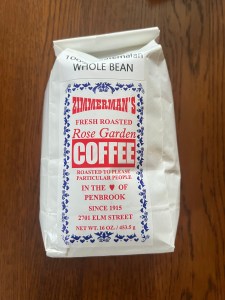
Quick Easter Interlude: Zimmerman’s Spectacular

Happy Easter, Passover, and more! If you’re a Pennsylvania resident, you can probably guess why I haven’t made my way into the Wilds yet: The weather hasn’t cooperated. The past three weeks have been a labyrinth of postponed beer festivals, downed tree branches, tenuous power grids, and winds strong enough to blow cars off the road. In Carlisle, the gusts were at least 60 miles per hour. None of this is conducive to travel. Nor was the lake-effect snow that fell across the Wilds!

Then came Easter, and I didn’t feel like leaving home during it, so I resolved to make the trip at some point in the two weeks or so after the holidays and before festival season begins in earnest. Good news: As I’m typing this, I’ve just returned from The Wilds, having visited two new coffee shops. Those will be coming soon, but this Zimmerman’s segment needed to be done.

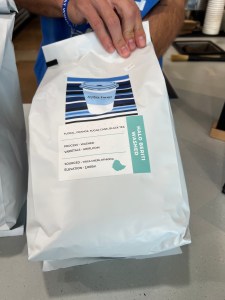
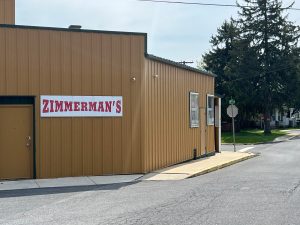
One of my Christmas presents had been coffee from Zimmerman’s Nuts & Candies. That’s a candy shop, but so much more in addition. It’s full Willy Wonka. Zimmerman’s holds shelf after shelf of not only candy but local farm goods, including raw honey, homemade ketchup, and (yes) several varieties of coffee. So, in need of coffee before my trip to the wilds, I headed off to Zimmerman’s to search for a few interesting roasts to tide me (and my readers) over.

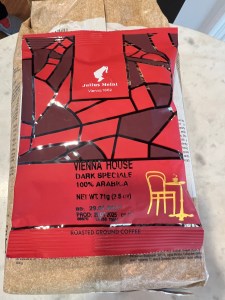
Zimmerman’s has its own proprietary coffee roasting operation called Rose Garden Coffee. Zimmerman’s is proud of the fact that they roast it Continental Style. Continental roasting heats the beans to slightly higher than the norm for a medium roast. The roasting process is halted when the desired color is reached for the beans by quenching them with water immediately. This leaves the beans with a lovely sheen and often a characteristic caramelization. It’s a bit less dense and rich than a high roast (which uses an even higher temperature). The House Blend (which I got for Christmas) is emblematic of a continental roasting style. It’s rich and buttery; exactly what I tend to favor. Thus, I was curious to see what variations on that theme were available, and got two new roasts.

First up was the Colombian. It was ground coffee rather than whole bean. Right out of the proverbial box, I knew this roast would be different. Upon opening the bag and smelling the grounds (this was a ground coffee), I made out the unmistakable signature of citrus or a floral bouquet remarkably close to citrus. That’s rare among Colombian coffees. There was also a robust chocolate quality, which is far more characteristic. After brewing it, the citrus notes dissolved into a barely-there fragrant quality. I could taste virtually none of the fruity power (or even the chocolate) present in the scent. Instead, the brew left me with a creamy, almost malt-like quality. That’s a quality consistent with what I would call some of the most drinkable Colombian roasts. I brewed it twice to ensure that this wasn’t in my imagination. It was not. What an odd effect! One caveat: Use a lot of it in the filter. Ground for ground, it’s lighter than I expected.

Next came a pure Guatemalan. The presentation here was almost the complete opposite of the previous roast. It was a whole bean coffee, and I could hardly smell anything distinctive. It smelled like…coffee. I ground it for 15 seconds (perhaps not enough), and heaped the grounds into the filter. Even without adding cream, a distinct smoothness accompanied a clear and present nut-like taste, or perhaps a caramel. It was less enzymatic than the Colombian and more classically Central American, but in a somewhat muted form. Fun fact: Milk doesn’t usually wash out the caramelized palette of a continental roast. That’s why continental roasts often find a home in lattes and other drinks meant to be as creamy as possible.

Both of these roasts make fantastic breakfast blends. Both are undoubtedly mellow. That was unexpected, given the power and forwardness of the house blend…a blend that might just be my favorite bagged coffee thus far (tied with Appalachian Mountain Coffee to the northwest). Both the grounds and beans were lighter than I’d expected for a continental roast, so I think they might have erred on the side of caution here and reined themselves in a bit in pursuit of general drinkability. I get that. Most people prefer a more delicate flavor, especially in their morning coffee, and especially if the roast is part of a fancy drink like cappuccino. In that case, the delicate caramel notes would bolster the chocolate.

Bottom line: I enjoyed both coffees, but their glorious House Blend takes my prize for everyday drinking. Note: These craft-roasted brews are nine dollars and change for a practically bursting bag. That’s amazing. Not getting wrecked at the cash register by coffee costs is a new experience. Let’s hear it for local roasters like these who put people first.

Prepare for several new posts over the next two weeks as I digest my epic trip into The Wilds. At some point soon, I might add several more pics of Zimmerman’s on this segment. Until then, stay caffeinated!


the first brew…

the second brew…

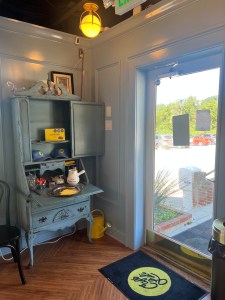
the shop…


Leave a comment

Posted by on April 21, 2025 in Uncategorized


Into The Wilds, Part Two: Alabaster Coffee Roaster & Tea Company, Williamsport PA

This has been a long time coming. I’ve been teasing for some months that we’d be taking this Journey into the Pennsylvania Wilds, and here we are: Williamsport, PA, the unofficial capital of the Wilds region. As much as Pittsburgh is often termed the ‘Paris’ of Appalachia, the city of Williamsport truly stands on its own amidst the grandeur of one of Appalachia’s least-tamed regions.

The Wilds takes up 25% of Pennsylvania’s land area but contains a mere 4% of its population. Even that figure is deceptive. Much of the population is concentrated in a few small areas of the Wilds, such as Williamsport and the string of large towns clinging to the West Branch of the Susquehanna River, separated from one another by its tributaries. Lycoming County is Pennsylvania’s largest county, housing over 110,000 people. That’s far less than half the population of Dauphin County (containing the capital), which is less than half its size. Here’s another telling figure: The Wilds is home to 2.1 million acres of forest and counting.

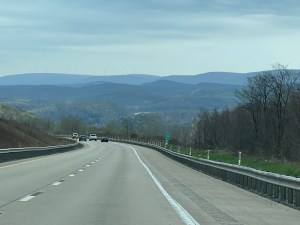
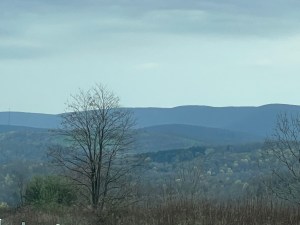
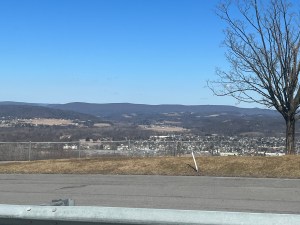
To get to Williamsport from Allenwood (which we visited in our last segment), simply head north over the mountains. They were still brown when they filled the windshield of our car on its approach to the final pass to Williamsport, but they looked no less alive for that. State game lands, farms, and many things bearing the name “White Deer” fill the valley immediately south of the ridgelines (which were unnamed, as far as I could tell…though if you know their names, please fill me in). Just north of the ridges is the sprawling cityscape of Williamsport. As one crests the ridge, there’s a pulloff spot ideal for looking down on the skyline, nestled against the broad, gray-green waters of the Susquehanna River.

Make no mistake, this is a ‘real’ city in the sense that Baltimore or Seattle are, albeit smaller. Williamsport houses less than 30,000 people, but this figure marks it as the largest settlement in the Wilds and the second largest in the PA Appalachians (after Altoona to the west). It doesn’t look like much until you get across the river, but when you do, immediately you’re confronted with the surprisingly tall buildings of a dense and bustling downtown.

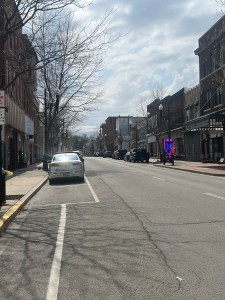
Parking was surprisingly easy to find (and cheap compared to Harrisburg parking). Here’s where I should mention that my mom bravely drove us. Don’t worry. I compensated her in coffee. We’re both caffeine fiends, and neither had been here for years. Far more of the traffic was on its feet than on its wheels. Curio shops mingled with official government buildings set along tree-lined streets. Williamsport is walkable, in other words. I hadn’t expected that, given the size of the city.

Alabaster Coffee had been recommended to me by some Amish coffee makers far to the west. That happened several years ago, but it has taken me until now to wind my way this far to the north. I’m kicking myself for the delay. Although Alabaster is a significant coffee roaster up here, with several locations, the flagship shop truly stands out. Remember how I said Williamsport was a true city and not just a large but diffuse village like many other Pennsylvania locations? That’s on full display here.

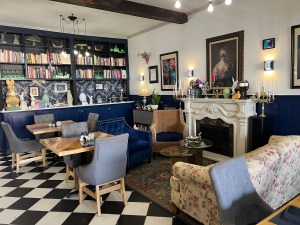
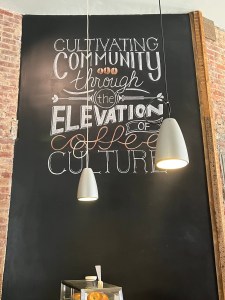
The coffee shop is spacious and elegant. It’s not just elegant; there’s a specific type of sophistication here which leaves the impression that the space was constructed as a destination. The apportionments (like the seating) are artistically rendered in hardwood and spotlessly clean. The old coffee roaster was displayed in an adjacent room. ‘Presentation.’ That’s the word I was looking for. It carries a sense of care for aesthetics that can typically only be found in an urban setting. Oh, you can find beauty in a rural location. Crafts in a rural home can be beautiful in ways that deliberate design can never be. Nonetheless, it was a curated design on display at Alabaster, and curated with a deft hand.

The coffee was produced at the level one would expect from a professional roaster. One of my favorite qualities was displayed: savoriness. That shouldn’t be surprising since this brew was South American. What I remember most fondly from this blend was balance. That’s what stayed with me. An almost vegetal almond note seemed evident to me, and although there was some heft to it, there wasn’t much earthiness, just that airy, wispy freshness characteristic of very fresh roasts.

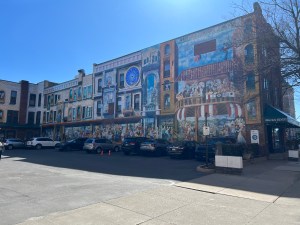
After coffee, we went down the street to a brewery called Bullfrog. The walk was as refreshing as the beer. Below, there’s a photo of a stunning mural painted on the sides of several adjacent buildings. That’s the urbanity I was mentioning before. In a way, Williamsport reminds me of a very large Carlisle. Like Carlisle, there’s a serious arts scene and an upsurge in civic pride. The ‘city’ feel isn’t a result of population, but of that pride. Wherever artists and artisans concentrate, you’ll get the beautiful heterogeneity that makes a place truly metropolitan. Since this isn’t a beer blog, I forewent adding pics of the brewery, but if there are any requests for them, I’ll gladly add them. I might do so anyhow at some point in the future.

Speaking of the future, the tour of The Wilds is not over yet. To get a representative sample of the land and the culture, I want to visit Center County (split in half into wilderness and Penn State halves) and fundamentally rural Clearfield County. Look for that sometime in April. After that, there’s no focus until we return to The Wilds in a few months. Prepare to visit wildly divergent coffeehouses as we journey through the Maryland and Pennsylvania festival scene. But first, the rest of the Wilds. Until then, stay caffeinated.


the beginning…

the city…

the downtown…

the ambience…

the merch…

the woodwork…

the old roaster…

the culture…

the art of a city…


Leave a comment

Posted by on March 30, 2025 in Uncategorized


Into The Wilds, Part One: Wagging Tail Coffee Company, Allenwood, PA

It’s finally happening: The segment I teased long ago is coming to fruition. The Coffeehouse Journey is finally headed into the Pennsylvania Wilds region. As I’m writing this, it’s been nearly two weeks after the trip to experience the PA Wilds coffee scene. A lot of preparation went into it, but, this brief series will only scratch the surface of what the region offers. There were multiple towns I wanted to visit but won’t have a chance to, at least not in this series. There will undoubtedly be another at some point in the future. Another series of Into the Wilds, that is.

As it stands, summer concert season is approaching too rapidly to take in the entire Wilds region before I embark upon different paths. In the name of consistency, I picked a small and varied selection of coffeehouses located in representative urban and rural areas of the Wilds. Yes, there is a metropolitan region in the Wilds, and we will get to that later. We’re starting, though, with the small town of Allenwood. That’s because, if you’re traveling north from Harrisburg, this town marks the precise border between the Wilds region (beginning in southern Lycoming County) and the Susquehanna River Valleys region (starting in northern Union County).

Allenwood makes an excellent border town between the two geographical and cultural regions. In most ways, it’s a typical rural Pennsylvania town. Blink, and you missed it. There is no ‘downtown’ to speak of. No, I should say, the downtown consists of a single church, gas station, and restaurant. That’s normal for small Pennsylvania towns, especially in this area. They don’t need more than this, and these towns are a product of their needs. Agriculture isn’t a hobby here, as I’ve said before. The logic of the farming world drives the infrastructure options. This town just happens to have a cool coffeehouse in addition to the norms.

We’ve visited a Wagging Tail location before this. There are several of those. The one we looked at previously was in Watsontown to the south of the Wilds. That was the flagship location. This is a drive-thru version. It doesn’t look like a drive-thru. Apparently, that’s a popular format for coffeehouses in the Pacific Northwest, and it’s catching on in Pennsylvania. With the amount of vehicles crossing the Susquehanna River valleys, it only makes sense to adopt that expression of coffee culture.

Interestingly, it has little impact on the aesthetic or feel of the location as a proper ‘coffeehouse.’ It still looks like one. There are still tables and chairs, albeit outside the cramped brewing and serving station. It felt almost like the building was attempting to be a traditional ‘coffeehouse’ despite its being a quick-serve establishment. There were even pastry treats, but it never felt like fast food. Somehow, coffeehouses seem to extrude the quality of ‘the coffeehouse’ into whatever space they occupy. That’s an idea worth exploring more in the coming weeks.

The coffee I was given was in Americano form. If I didn’t want to get something fancy, espresso was all they had on hand. I’m not surprised; this location must go through an incredible amount of inventory. Route 15 North runs through town. That road is the only (major) road north. Back to the coffee: It was Wagging Tail’s proprietary roast (they are a roaster). I wanted their house blend, but this one substituted finely. There was a mellow nuttiness to calm down the frenetic ‘roasty’ quality and bitter astringency characterizing espresso generally. Granted, a nut or chocolate flavor constitutes the base flavor palette of espresso. I did catch some of the stone fruit taste oft beloved by espresso lovers. All told it was a nice little roast.

Here’s how we’ll do this. Next week, I’ll detail my adventures in the upcoming location we visited in this ‘Northern’ portion of the whirlwind tour. A few weeks later, I’ll have completed the ‘Western’ segment and will cover that in detail. It has to be broken up because there was just too much to see and do for a single post. Like the coffee in my gullet, these words and deeds need time to be digested. Until next time, stay caffeinated.


the town…

the place…

the beans…

the industry…


Leave a comment

Posted by on March 23, 2025 in Uncategorized


Return to Boiling Springs (and Warrior’s Son Coffee)

Today, I put my hat and gloves in the closet for the first time in months. It felt good. The temperature felt better, reaching almost 60 degrees today and dropping hints of the impending Spring. I know it’s not going to last. March almost always features as many snowstorms as bright blue days. I will have to go back into that closet soon and pull the hat and gloves back out for another round of winter. Even so, a symbolic or temporary victory is still a victory.

Such was the case regarding my latest coffee adventure. On Saturday, February 22, the two weeks of insane cold that had gripped Pennsylvania was just loosening, and a festival was in the works at Allenberry Resort in Boiling Springs.

Sound familiar? We’ve been there before on this Journey. A few months ago, I visited the small cafe gracing the foyer and lounge of the main building in the resort complex. This past weekend, that same building (along with the entirety of the resort) played host to what appeared to be the first festival of the season. I’m sure there had been others elsewhere; snow festivals, ice fests, and what have you. This just felt different. It felt like Spring. It felt like everyone waking up.

As it turns out, some of that buzz might have resulted from Warrior’s Son Coffee, based in nearby Mechanicsburg. In operation for only about a year and owned by Angel DeJesus and his wife, the name of this ambitious startup is an ode to his father, who came from Puerto Rico in 1950 and served in the Army. This hit home for me since my own father is a Vietnam veteran. When I saw the name of the coffee company, I had a bit of an inkling that this would mean an homage to someone proud of someone’s service. So it was (and is).

There is no coffeehouse yet. Angel’s setup was a temporary one for the festival. It looked professional, though. As usual, my instincts didn’t steer me wrong. Within minutes, the aforementioned owner and I were deep in conversation regarding the benefits and misconceptions surrounding various roasts. We also pined for the festival season to begin in earnest and hoped that maybe this festival marked the beginning of that trend. Everyone who shares a passion for coffee shares more than that: there’s a temperament; a delight in art, of which coffee is only one powerful expression.

Angel gave me two free samples. The first was called Ranger’s Roast. It’s a medium, but he billed it as a morning blend. I like that. It’s good to give morning people options besides lighter fare. I got a definite fruit flavor in that first sip, though it was blended with a rather earthy presentation. It was molasses! That’s what I was tasting. I have no idea what origin resulted in that flavor, but that was exciting. Even better was the citrusy ending. I don’t really care for citrus flavor in coffee, but this hit right on the back end of the palette, so it was more a statement than a manifesto. Very artfully accomplished.

My second sample was of the Angel’s Blend. Now, this was more my usual style. The blend was deep and robust from the get-go. There wasn’t as much citrus in this as there was in the last, but it was still there, only muted. The full force of this blend was displayed in the grounded richness, including more chocolate along with unmistakable (in retrospect!) caramel and umami notes.

Unfortunately, the bean sources and roasters are proprietary, so I couldn’t get too many details about the ‘secret recipe’ behind these blends. I’m truly looking forward to seeing what this little family outfit has in store for the burgeoning Appalachian coffee world. I’m also interested if they’ll be attending any more festivals. When I arrived at around 1:40, attendance at this event was already well over 700. That’s massive for a festival so early (and far from any urban centers). I hope that’s a sample of what’s to come as warmth and sun increase.

Our next stop is probably Williamsport, but it’s so hard to keep up with the proliferation of coffeehouses in the urban countryside(s) and the valleys of Amish country. Until next time: Stay caffeinated!


the festival…

the main building…

the beans…

the additional beans…

the first sample…

the second sample…

the coffeemaker and the coffeehouse guy…


Leave a comment

Posted by on February 27, 2025 in Uncategorized


Pine Ridge Cafe

Big Valley, Kish Valley, the last valley before Happy Valley. It’s almost the Pennsylvania Wilds, but not quite. Kishacoquillas Valley has many monikers, but the feeling you get when you hear the words is the same. At least that’s true if you live in central Pennsylvania. It’s a main center of Amish culture, in some ways just as much as Lancaster, if not moreso.

I say ‘if not moreso’ because Kishacoquillas Valley is home to no less than three of the more conservative Amish groups in the state. These are the Byler Amish, Renno Amish, and Nebraska Amish. The latter is the most conservative of the three, embodying many of the commonly imagined archetypes of Amish life. Many don’t even paint their barns, and electricity use is kept to a minimum. Not even lawnmowers are allowed, though some shockingly have cellphones. It makes sense: Use technology, but don’t base your survival on it. That’s a good habit.

Pine Ridge Cafe is another institution that really exemplifies a balanced approach to the complications of modern society. So does the town it’s situated in, called Belleville. Belleville is hard to find. What I meant to say was it’s hard to situate. The town of Belleville is laid out like a large village, with only a minimal ‘downtown.’ There’s a historical society in the town center. Otherwise, there’s no sign of gentrification. The town is all business, and that business is agriculture.

Look below in the photos section, and you’ll see how, although the region is bucolic, it’s also a food machine, plain and simple. Even in the ‘wilderness’ of Pennsylvania, if an industry does exist, it will be farming. It won’t be like the ‘hobby farms’ you’ll find in other states. This ain’t a hobby, here. It’s life.

In that context, Pine Ridge is a bit of an apparent outlier. It looks like the trendy coffee shop of a town in the Philadelphia countryside. The establishment is both new and old. It used to be called Taste of the Valley. The latter was a fixture of the region for years, and it was only within the past year and a half that it changed to its new name and mission. Although I have no idea what it looked like in its original iteration, the newer business is clearly coffee-focused. It’s also obviously a product of Mennonite roots, with a straightforward interior absent of kitsch. There were a few nods to outdoor culture, notably the names of some of the coffee blends offered. Bigfoot Blend, Ridge Runner…someone likes the great outdoors.

The coffee really threw me for a loop. I took the Ridge Runner as an homage to my love of the Appalachian Trail. A Ridgerunner is either a person who lives in the high mountain regions of the Appalachian ridgelines or works directly for the Trail in some capacity. That’s often describing the same background. Ridge Runner the coffee was a dark roast; a mix of Ethiopian and Sumatran. True to form, it was intensely earthy. I picked up hints of pipe tobacco and deep smoke. This probably got roasted for a long time, and no, that’s not a ‘defect’ unless you consider deviation from the light roast trend to be heresy. Nutmeg might have been there, too, but I can’t be sure. It was quite smooth on the front, even as the back end revealed those complexities.

Point of fact: The coffee is also their own. That’s right; it’s Pine Ridge Coffee, roasted by the Yoders, Trent, and Leah (who I must speak to sometime!). The website says it was started back in 2022. That would jive with what we’ve seen during this Journey lately; rural coffee roasters cropping up and turning hard times into great opportunities.

That’s the American spirit, though. Or maybe it’s just the best of human nature. I hold that the ideals of the American Revolution tend to bring out the best in people, so I suppose I take both sides. Kind of like this region does. On the way through town, I saw an unexpected rainbow flag on a house. That just goes to show that nobody and nothing is simple. I wonder what we’ll find as we plumb the depths of the Pennsylvania Wilds. Until next time, stay caffeinated.


the valley…

the coffeehouse…

the brews…

the lowkey amishness…

the setup…

the ville…

the lifeblood…

the pride…

 
Leave a comment

Posted by on February 12, 2025 in Uncategorized


Holiday Coffee Gift Adventure In Five Parts

Happy New Year! It’s been a hot minute (Millennials used to say that) since the last post. I had a great series of trips planned to acquire coffee and adventure. Then, the check engine light came on. Then, the polar vortex hit. Now, it’s about to snow. Thankfully, Christmas yielded no less than five spectacular coffees, gifted to me or found at markets. It’s an amazing haul and should hold us over until next week when the air warms back up and my jalopy thaws.

Let’s save the best for first. Regarding coffee, I don’t believe in standing on ceremony. This blend, called Rose Garden, was an unexpected joy; unexpected because it hailed from several blocks away from my house. A local candy shop called Zimmerman’s is a local mainstay. I go there a few weeks before Christmas with my mom to get various specialty foods annually. This year, we also found coffee there. It’s their own blend, and it’s fantastic. Dense and leguminous, it was practically a meal. There was no indication of whether it was a medium or dark roast, or if it was primarily Guatemalan (my best guess), or Sumatran (also a contender), and it didn’t need one, because the blend stood on its own as unique. The package reads: “Roasted to please particular people.” I am, and it did.

hometown brew…


The next offering was the St. Remio bio-organic house blend. This was really interesting in that it tasted a lot like Turkish or Greek coffee. Intensity was promised, and intensity was delivered. There was a bit of an acrid taste to the otherwise full-bodied profile; a bitterness emblematic of that particular category of coffee. There’s an oddly specific reason for this: over-extraction. The coffee was extremely fine-grained, almost a powder, and when that happens, the coffee interacts with water rapidly, with organic compounds rapidly giving an astringent and almost rubbery flavor. It’s not a sign of bad coffee; it’s a niche taste that some aficionados prefer. It’s not normally my cup of tea (heh), but sometimes I’m in the mood for a touch of the exotic. I’ll freeze this for when I’m in a Mediterranean mood.

taste of the Mediterranean…


Hue. That was the name of the third roast I sampled. It came courtesy of BKG Coffee Roasters. You might remember them. They’re a small batch roaster out of Brooklyn, NY that we sampled over a year ago. Hue is a dark roast, but there’s no harshness here. In fact, I drink it specifically as a neutral force when I’m not in the mood for anything niche. The package advertises dark chocolate, molasses, and cherry notes. A quick whiff of the whole beans reveals the cocoa long before it hits your taste buds. That said, it wasn’t overpowering in the mouthfeel; when taken in its entirety the roast was quite mellow.

back to bkg…


Coffee number four was a pure Costa Rican ground coffee courtesy of Adventure Awaits Coffee Roasters, distributed by Great Lakes Coffee Roasters of Buffalo, New York. This was much more a traditional Central American medium roast. Hue’s rich chocolate and brown sugar were nowhere to be found here, replaced with that characteristic nut flavor coupled with an odd (but welcome) vegetal quality. This is a coffee I could drink daily. That’s oddly ironic for a coffee roaster called “Adventure Awaits,” but I’ve concluded that it’s tailor-made for the adventurous sort.

a new adventure…


Have you ever had a dark roast that drank like a breakfast blend? Me neither, until now. It was Third in the Burg. It’s an event every third Friday of the month in Harrisburg, PA. The focus is on art galleries and curio shops; they’re open that night throughout the midtown and downtown areas and often hold free events. The famous Broad Street Market is also open and is mostly a space for food and drink. Today, however, there was coffee.

The company I’d never heard of before. Misty Mountain Coffee is the name, and they’re from Richland, PA. That’s way down the road towards Reading (‘the road’ being Route 422). The town sounds familiar. Oh, now I remember! This is near Timber Creek, a coffeehouse featured on this blog months ago. I love the eastern countryside of Pennsylvania. Endless fields and small towns with deep histories create a tapestry. Misty Mountain’s roast room is in Richland itself, and they pride themselves on sustainably sourced coffees from Central America.

The woman selling their beans at the Market (along with some other wares) told me a fascinating story. She spoke of Jamaican coffee being offered by them. In fact, one of them was called “Jamaican-Me Crazy.” I opted for the dark roast, and interestingly enough, it felt way more like a breakfast blend, even as the first sips betrayed its deep, dark Central American roots. Even so, I wondered how such a naturally inherently earthy and aromatic variety was made to yield such a supple mouthfeel. Clearly, a trip to Richland is in order.

That’s all for this round. See everyone in either late January or early February when (let’s hope) there’s a break in the deep freeze and I can get back on the road, heading back into the Wilds! Until then, stay caffeinated, dear readers…

 
Leave a comment

Posted by on January 21, 2025 in Uncategorized


Christmas Spectacular: Lower Paxton Christkindlmarkt and Independent Ground Coffee

That was a mouthful. As it turns out, so was the coffee. So were many things at Lower Paxton Christkindlmarkt last Saturday in downtown Linglestown, PA. A bit of background is in order here. Around this time of year, we start preparing for the holidays and begin shedding festivals. The second part of that sentence is the bothersome one. There isn’t much to do out and about after autumn and its pumpkin spice glories have passed. Cold weather and soaking rain keep people indoors. Then, the snow comes.

I, for one, would be thrilled to attend an outdoor event in the middle of winter. A beer tasting in a snowy field on a crisp clear day sounds like heaven. Give a band some heaters, and we have a plan. There is a festival near here like this in some respects called Ullr Fest. That happens in early December at Ski Roundtop. Vikings lighting a bonfire combine with endless food in a Yule extravaganza. But I want a summer festival in winter. I want tents and vendors and food trucks. I want beer, wine, and free samples of everything.

Enter Lower Paxton Christkindlmarkt. Scroll down to the photos, and you’ll see what I mean. Over a hundred vendors crowd the main drag in the middle of winter for one long day of shopping in a winter wonderland. I waited all year for this festival. I thought it was huge last year, but this year they outdid themselves. The fire hall housed an awesome craft beer far, hot chocolate was plentiful, and extra tents spread well beyond even last year’s expedient expansions. Also, there was coffee. Good coffee. Independent Ground Coffee.

We’re getting in on the ground floor of something very new here. Independent Ground has only been in operation since September. Apparently born of the Rational Republic podcast, Independent Ground Coffee is a homegrown institution in the making for Linglestown. Linglestown is (of course) already known for successful coffee operations. I’ve made no secret that my favorite coffeehouse, St. Thomas Roasters, is also here.

Thankfully, Independent Ground offers something entirely different from St. Thomas, giving the business a role in this otherwise crowded market. First, they’re not technically a coffeehouse…at least, they’re not a coffeehouse yet. Operating out of a building in downtown Linglestown, they ship their coffee everywhere, with free shipping for local deliveries. The various roasts are sourced from a diverse array of roasters all across the county. That’s apropos since Independent Ground fills a specific niche: They’re overtly and proudly patriotic.

That’s not unknown in the coffee community, though it does position them as outsiders given the nature of coffeehouse culture as an institution. Traditionalism is often shunned or reduced to aesthetics in favor of embracing headlong change in all its forms. Not all coffee culture is quick to discount historical cultural expressions, though. Black Rifle is another famous patriotic coffee outfit. They’re well known for opposing certain postmodern policies and supporting police and the military, for example. It’s not as if the past and future are incompatible, though some believe them to be.

Independent Ground is a bit more mellow and universal in its patriotism, mentioning up front on the website a desire to unite people. Ironically, recognizing a common core of humanity beyond tribal identity used to consistently be the heart and soul of a progressive worldview. That’s a discussion (a rant, rather) for another time. Let’s let the beauty of this day and the pure joy of this Hallmark-esque event transcend the manufactured banality and absurdity of politics.

After all, the spirit of the Enlightenment, born as it was in continental coffeehouses, was nothing less than a revolt against ideology itself; a rebellion against both unquestioned/unevolved tradition and unreasoning desire, all in the name of the fact that objective truth (moral and physical) by definition unites us regardless of religion or heritage; the true nature of E Pluribus Unum. Food for thought.

Speaking of consumables, the coffee I had this afternoon was called (appropriately) the Small Town Brew. Unlike most coffees, it blended dark (Columbian), medium (Costa Rican), and light (Guatemalan). Normally, a roast that falls into one category will venture into the next to offset some of its more distinctive characteristics with additions from an adjacent kind. A dark roast will be blended with a medium roast to add balance and nuance to an otherwise bold profile. Blending three together is a little perilous.

It was also delicious. An ambitious blend like this could have gone incredibly bad or very good. In this case, it went splendidly. What happened was (as near as I can tell) the addition of a light roast permitted the flavor of the original beans to shine while the dark roast added hefty acidity which was then balanced by the inclusion of the creamy medium. Whew! It’s nice to be on a roller coaster that doesn’t make me sick. I’ll be looking for this blend again. A few were being offered and I didn’t have the chance to try them all. Something tells me there’s much more to come from these fine folks in the future. For now, it’s back to holiday shopping for me.

I’ll return to the road after Christmas, assuming the car survives repeated freezing and thawing. Until then, I wish all my readers Happy Holidays, Merry Christmas, Yule, Solstice, etc. The magic of this time of year, after all, is universal. Savor it.

Until next year, stay caffeinated.


the crowd…

the endless tents…
the coffeehouse…

the spread…

the coffee…

the extra coffee…


Leave a comment

Posted by on December 23, 2024 in Uncategorized


Roast & Refuel (in Muncy!)

Into the Wilds. After many fits and starts, the Journey is heading into the Pennsylvania Wilds. I’ve been teasing it for a long time, but something always conspired to keep me in the valley. This time, I found the perfect excuse to get me on the road: a road trip with my Mom taking us through our family’s ancestral home in the hills to the north of where the West Branch and North Branch of the Susquehanna River connect.

The coffeehouse we visited today was located in Muncy, a town best known for being an attractive stopover on the way north to Williamsport along Route 180. It’s also known for SCI Muncy, a women’s prison known for housing some of the loveliest female inmates outside Texas, Florida, and Kentucky. OK, there’s more to Muncy than a prison and a gas station. We’ll get to all of that later. Let’s talk coffee.

Roast and Refuel is in the part of Muncy that lies on the east shore of the West Branch of the Susquehanna River. It’s located at the far northern end of town, at the intersection of Water Street and Main. The thoroughfare leading into town is stunning, by the way. Tree-lined streets and old stone houses are everywhere. For its size, it has a surprisingly vibrant downtown, at least in the core of it (in the previously mentioned intersection). The building housing Roast and Refuel has been part of that scene for a long time. The coffeehouse is built into an old theatre called The Ritz.

Fantastic news: They left the theatre lobby largely intact. The outside has been kept in its Art Deco glory, but I wondered what had been done to the interior. Not much, really. Two features really stood out: The first was the lounge area that looked much like the green room at the television station where I formerly worked (albeit with a few artsy accoutrements). The second area of note was the long hallway leading to the restrooms. Here, you can see old photographs of Muncy’s past beauty. Like most small towns in Pennsylvania, it’s had a long past, including Quaker settlements in the 1700s and political throwdowns over abolition in the 1800’s.

The coffee was a proprietary roast by Gnosis Coffee Roasters in nearby Lewisburg. We’ve been to Lewisburg before on the Journey. That town and nearby Milton are home to a series of brilliant cafes detailed elsewhere on this blog. It shouldn’t be surprising that Lewisburg is home to a craft coffee roaster. The town hosts Bucknell University and embodies the conventions of college towns everywhere, including a burgeoning coffee scene.

The House Blend was a true mixture of flavors. It synthesized these features through balanced acidity and a general smoothness. The beans hailed from Guatemala and Brazil. They were excellent examples of what these specific locales offer in a cup. In other words, if you enjoy the qualities of these beans specifically, you’ll view this blend as an epitome. The Brazilian beans showed off their dark and velvety aspects and the chocolate and nut flavors and aromas for which they’re famous. Fun fact about Brazilian beans: Usually, they’re optimal for dark roasts, but they can skew medium depending on how they’re brewed. Guatemalans, like most Central American offerings, make balanced medium roasts. Combining the two stiffened the Guatemalan while mellowing the Brazilian. I’m really going to have to pay a visit to Gnosis.

I asked about events here, and the truth is that they’re rather sparse. That said, Roast and Refuel is clearly a center of the artistic community here. A local art studio called Centered Earth holds a painting class in the cafe. I’ve never been there, but with a name like ‘Centered Earth,’ it has to be a bit of a hippie haven. As you can see in the pics below, creative energy oozes from the very walls of Roast and Refuel. Statistically speaking, even if only one in a few hundred people is interested in the arts, every village and hamlet has a secret underground of people who think outside the box. When I think of that, I think of places like this coffeehouse.

On the way home, all I could think of was how massive the landscape was. Yes, that’s the word I’m using despite Grammarly’s protests: massive. The bridges were bigger. The fields were bigger. The entire region took on a traditional quality as if everything was between here and elsewhere. That’s not far from the truth.

Look at a map of the Wilds, and you’ll see only a few major roads crisscrossing the otherwise endless forests and fields. State and national parks sprawl for thousands of acres and getting a signal on your phone is anything but a give. This is a land of adventure, plain, simple, and in the traditional sense of the phrase.

The next leg of the Journey will either be to the northwest (into the center of Pennsylvania), to the north (to Williamsport and deeper into the Wilds), or to the northeast (into the Poconos). I’ll try to keep us in the Wilds this time. If this is what one segment of its creative coffee scene has in store for us, imagine what else there will be. Until next time, stay caffeinated.

Oh, and if I don’t post in two weeks, happy holidays, Merry Christmas, Io Saturnalia, and all the rest!


the approach…

the town one way…

the town another…

the old theatre…

the show…

the dining…

the stage is set…

the things and such…

the town as it was…

the roast…

the land…

the bridge over sometimes troubled waters…


Leave a comment

Posted by on December 9, 2024 in Uncategorized


The Anthracite Tour Part 2: Sweet G’s Bakery & Drinkin’ Pretzels

I’m just going to be honest: I had no idea what a ‘drinkin’ pretzel’ is, and I didn’t ask. Call it poor journalism if you want to. This isn’t journalism. Fine. Technically, this is a journal. I think of it as a rough log that never becomes smooth. Those are nautical terms: The ‘rough log’ is the first version of the ‘captain’s log,’ and the ‘smooth log’ is the thing that becomes official. This blog will never be official.

This portion of the Journey certainly wasn’t official. At least, it hadn’t been anticipated. The plan was to go directly into Mount Carmel and possibly points north. Not until I checked the map twice to see how to get out of the mountains most expediently did I notice a coffeehouse to my south. It was located in the town of Pine Grove. I know what you’re thinking; Pine Grove is on South Mountain. Well, yes there is, however, there’s another Pine Grove up here in coal country.

Interestingly enough, this Pine Grove is also near the Appalachian Trail. About two miles to the south is a sizable trail parking spot along with a cluster of historical locales like the Pilger Ruh historical marker and several ‘lookout’ sites that are rather dangerous but offer breathtaking views of the valley below. I took advantage of the clear weather to take a nice little hike on the trail as I headed home. More about that later.

Pine Grove is another town that embodies the former Pennsylvania coal mining settlement lifestyle. Until 1862, Pine Grove was home to a branch of the world-famous Union Canal. This branch connected Swatara Creek to Union Water Works and was used to ship (you guessed it) anthracite. These days, much of the area is a state park, and the entire region is replete with historical sites like Nutting Hall and Pine Grove Theatre, both of which are on the National Register of Historic Places. A Lutheran church existed here as early as 1782, and it was among the first buildings, showing just how organically and haphazardly settlement took place here in the heady frontier days of Pennsylvania coal.

Stepping into Sweet G’s Bakery, I didn’t know exactly what to expect. It’s marketed as an eatery, but coffee was definitely on the menu, or at least that’s what the map indicated. Not being one to trust the Internet, I kept my coffee from the last place close at hand in case there wasn’t any coffee, or if they were exclusively serving chain-store coffee. It was a close call: They almost gave me Folgers.

OK, I like Folgers…for general use. I want something more distinctive when I’m out and about. Somehow, the woman behind the counter knew that intuitively. I don’t know how or why, but hidden in a cupboard was a craft roast they use specifically for lattes and other fancy drinks. I shouldn’t have been that shocked; rural Pennsylvania loves its big chain, powerhouse roasters. Cheap but powerful is how people tend to take the coffee, especially the truck drivers who forge their way up the mountains daily. Thankfully, Sweet G’s knew to keep everyone’s options open with a special stash.

The coffee I got came courtesy of Mississippi Mud, a coffee wholesaler out of St. Louis, Missouri. They’re big, but not well known; I’ve never seen their products in Pennsylvania. Dancing Dogs was the name of this particular roast. It was a medium roast and advertised chocolate, berry, and raisin notes. I got all of those notes in a melange. The almond milk I had in the latte drowned out a bit of the richness that occurs with a roast like this, but this particular roast was only currently available in latte form. Even so, it was an excellent blend.

I was surprised to find a craft latte up in the mountains at all. Sweet G’s is as modern as its surroundings are historical. The cafe has only been around for about four and a half years. The newness shows in the fresh, upbeat surroundings, especially the exterior which would have been hip downtown. I’m picturing this place as a centerpiece of the growing community here. Yes, the roughly two thousand residents added a few to their number this year. Given the virtues of small-town living in a hypermediated age, I wouldn’t be stunned if we started to see the young professionals heading back to the countryside. Time will tell. Those sophisticated folks will need a space of their own. We know that space already exists: the coffeehouse.

Oh, and by the way, I finally figured out what a ‘Drinkin’ Pretzel’ is, and there’s a reason I’m capitalizing it now: It’s proprietary! It’s a trademarked thing. Drinkin’ Pretzels are these flavored hard pretzel chunks that look like a dentist’s nightmare and a gluten lover’s dream. I’m the gluten lover in question. A meal without bread just doesn’t feel substantive to me. I held back from getting any vittles this time, but when I return (and I will), I need to remember there is a crunchy, bready meal waiting when I get off the trail.

Ah yes, the trail. I decided to take the long way home, down Route 501 and over Blue Mountain. In doing so, I came upon an entry point for the Appalachian Trail. I didn’t have my bear spray handy, so I didn’t wander far. This is the time of year when bears eat the last of their dinner before hibernation. I wasn’t keen on being that dinner. It had recently rained, and the mountain sky was clear and blue. Autumn has just begun to fade into winter here, and that afforded a chance to see through the trees to the valley below the ridgelines. Climbs here are steep, but that’s what I like about them. It’s a beautiful challenge. At one point, the trail looks like it’s curving up to meet the sky.

As the sun sank deeper toward the earth, I packed up my trekking poles and put my boots on the gas pedal. It was time to go home. At least the car didn’t blink any disturbing lights at me this time. The next entry should be even further afield. I want to head northward into the mountains in both directions (northwest and northeast) to examine what the deep wilderness beyond the river valleys is doing with coffee. Many of these towns are very isolated. That makes them very interesting. I want to get across the Maryland and West Virginia borders soon (I’ve reviewed coffee in Baltimore in a previous entry), but, for now, there’s a lot left to explore in Pennsylvania.

Until next month, Happy Thanksgiving (and stay caffeinated).


the main drag…

more of town…

sign, sign…

everywhere, a sign…

self explanatory…

the seating…

the roast…

the liminal seating…

the woods…

the trail…


Leave a comment

Posted by on November 22, 2024 in Uncategorized


The Anthracite Tour Part 1: Cinnamon Stix Coffee & Gift Shop

I like my coffee black as coal. I want no part of it if one can confuse it for tea. It’s only right that I’d eventually reach the heart of Pennsylvania’s anthracite country looking for a strong cup of coffee. A little background: Pennsylvania’s coal-mining country lies well northeast of the capital in the branch of the Appalachians spreading inexorably into New York. Anthracite coal is known as the most carbon-rich and clean-burning form of coal, and it’s been Pennsylvania’s trademark for centuries. This has resulted in an amazing number of ‘boom towns’ having emerged over the years nestled in the valleys and ‘hollers.’

I might have said this is Pennsylvania’s former coal-mining country, but that wouldn’t be accurate. As of 2022, Pennsylvania produced 2,357 short tons of anthracite and 37,345 short tons of bituminous coal (most of the latter being mined from the southwest region of the state. The coal industry isn’t what it once was in this state. Most of the forested mountains in Pennsylvania state were denuded of trees in the process of mining them in the 1700s. Thankfully that disaster is over. In its wake is a region being slowly retaken by nature as populations fall. Even so, beautiful small towns persist here.

Mount Carmel, situated in eastern Northumberland County, is one of the most iconic of these towns. Like coffee, the borough fills the ‘cup’ of the mountain fold it sits within from ridge to ridge. Towns tend to spread organically in the valleys, but Mount Carmel is a tight grid of buildings that includes two discernable ‘main streets.’ The area was settled in 1770, but Mount Carmel didn’t become an incorporated township until 1854 and wouldn’t be a borough for eight more years. Coal was the reason for settlement, so in many cases, the mines came long before the towns did.

This town embodies the friction between the past and the future in Pennsylvania. It’s rich in history and people, but unfortunately, much of that population is leaving for supposedly greener pastures. From a height of about 18,000 people in 1930, today’s population is less than a third of that. Even so, civic pride waxes high here, and I discovered hotbeds of local activity; individuals keeping the flame of culture burning in the heart of coal country. I came with the express purpose of visiting one that’s existed for 27 years: Cinnamon Stix Coffee and Gift Shop.

OK, first of all: This place is Christmas incarnate. When I heard the phrase ‘gift shop’ attached, I expected tchotchkes. Nothing prepared me for the sheer number of gifts available for sale here. As it turned out, the first floor was only the beginning. I went upstairs through a narrow stairwell, the woman at the counter had told me there were places to sit and hang out. That was quite an understatement.

Each upstairs room contained a different set of odd delights. A different delightful setting, I should say. ‘Delightful’ isn’t a word I use lightly, especially as a fortysomething guy. It’s gotta mean something if a guy with an unkempt red beard goes and says it. Seriously, there were more ways to relax than I have ever seen in a coffeehouse. One room was a Christmas wonderland. Another had what looked like an old English tea table. Yet another had a streamlined, modern setup. There was even a pink bedroom. Yes, it was open to the public. I didn’t stay long, though, eager to head back downstairs to explore the rest of the town. But first, let’s talk about the coffee.

The beans came courtesy of Basin Coffee Co. in Danville. Danville is a town to the northwest of Mount Carmel and it’s home to several coffee roasters if Google Maps is to be believed. Clearly, I’ll have to investigate further. I got a nice medium Columbian roast. The freshness was the standout characteristic here. Here was a case where the local nature of the roast manifested immediately. It was nice and mellow, with well-balanced acids. The structure existed (I would say) because the beans weren’t too aged. It’s the same in most cases. This is why it’s good to source locally, and there seems to be a real network of local roasters here in coal country, similar to the Amish roasters you’ll find elsewhere in rural PA.

With coffee in hand, I set out to explore the rest of the town. One thing became immediately obvious: This is a close-knit community. Everyone at the lunch joint I went to seemed to know each other. Events were advertised on shop windows. I stopped at the library. Outside were free books, one of which I snapped up. Children played inside. A woman at the counter lamented that nobody comes in except to use children’s services and how members of former clubs are passing away. The library itself was beautiful and the staff cared. I wanted everyone else to care that much.

Vibrancy, however, clearly remained in the form of a fantastic bookstore called Secondhand Rows. This place was paradise for book nerds. Books were stacked haphazardly (which is how I stack them at home). It seemed there was a book for every topic, even a selection of witchcraft-related tomes, likely for Halloween. After resisting the urge to shop, I headed back up the mountain that would eventually lead me home. In fact, I didn’t take the direct route home, but that tale will have to wait for next week.

This was only Part One of the Anthracite Tour. Thanks to my penchant for taking the long way to anywhere, I found even more coffee on the way home. In this instance, I came down to Route 81 through twists and turns through the mountains and gaps between them. Until then, stay caffeinated!


the road in…

the road out…

the sign…

the season…

the coffee…

the gifts…

the coal…

upstairs…

also upstairs…

the melody…

the friend…

the time…

the bookstore…

the long road home…

 
Leave a comment

Posted by on November 18, 2024 in Uncategorized